
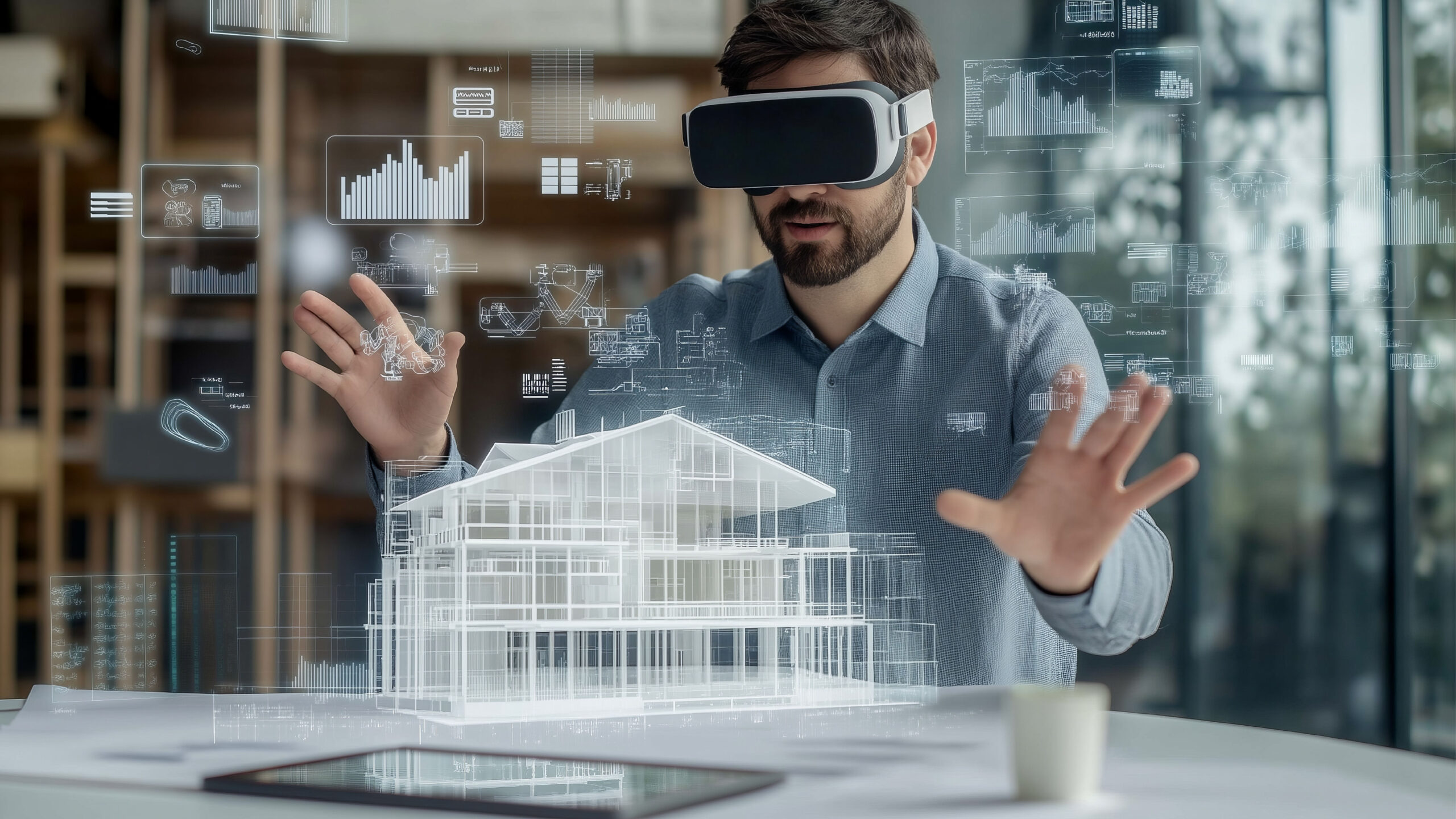
Artificial artificial intelligence in real estate is changing the way the real estate market is analyzed. But not in the way many people imagine.
For years, the real estate industry has relied on experience, market knowledge, and the human ability to interpret information before making decisions. Today, that way of working is evolving.
Artificial intelligence, known as AI, is already part of the day-to-day operations of many companies in the sector. Its ability to analyze large volumes of data, identify patterns, and streamline processes is making the real estate market more efficient, accurate, and strategic.
However, the real change isn't that AI is replacing people. It's that it's transforming the way professionals interpret the market and make investment decisions.
From Access to Information to the Ability to Interpret It
A few years ago, having insider information could give you a significant competitive advantage. Whoever had better data was better positioned to anticipate market trends.
Today, the situation is different.
Access to market data, real estate trends, economic indicators, consumer behavior, and industry projections is becoming increasingly widespread thanks to digital platforms, analytical tools, and new technologies. In fact, international organizations such as the World EconomicForumhighlight how artificial intelligence is transforming the way companies process information, automate tasks, and make strategic decisions.
In this context, the difference no longer lies solely in having information. The real advantage lies in knowing how to interpret it.
Artificial intelligence can organize millions of data points in seconds, detect repetitive patterns, and generate predictive scenarios. But turning that information into a strategic decision remains a task that requires human judgment, experience, and market knowledge.
How Artificial Intelligence Is Already Impacting the Real Estate Industry
Artificial intelligence in real estate is no longer just a promise for the future. Today, it is already being used by companies, investors, developers, and real estate advisors to optimize processes and improve decision-making.
Among its most significant applications are:
- Analysis of Real Estate Market Trends.
- Asset Estimation and Valuation.
- Forecasting Demand Behavior.
- Automation of operational processes.
- Optimization of smart buildings.
- Segmentation of potential customers.
- Improved customer experience.
- Analysis of areas with growth potential.
These tools make it possible to process information more quickly, reduce analysis time, and make better-informed decisions.
For investors, this represents a significant opportunity: to evaluate assets more accurately, identify risks in advance, and spot opportunities before they become apparent to the market. At Private Real Estate, this approach is integrated into our real estate investment consulting and management services inPanama, where market analysis is combined with strategic vision and local knowledge.
Technology speeds up analysis, but judgment shapes strategy
There is a misconception that artificial intelligence will completely replace human analysis in the real estate sector.
The reality points to a different scenario.
AI can identify patterns and process information at a speed that is impossible for a human to match. It can compare historical data, analyze market behavior, and generate predictions in less time. Studies by global firms such as McKinsey & Company indicate that artificial intelligence is helping companies improve productivity, accelerate data analysis, and strengthen decision-making.
But it still needs context.
In real estate, variables are constantly changing. Infrastructure, mobility, regulations, supply, demand, urban development, and economic trends directly influence a property's value.
Understanding how these factors interact requires more than just an algorithm. It requires experience, an understanding of the market, and strategic analytical skills.
That's why technology doesn't replace judgment. It enhances it.
The future of real estate will be collaborative
The future of the real estate market will not be determined solely by technology, but by the ability to combine digital tools with human expertise.
The professionals who make the best use of artificial intelligence will not necessarily be those who use the most platforms, but those who know how to turn data into decisions.
In an increasingly dynamic market, AI will enable us to analyze data more quickly, make better comparisons, and anticipate trends with greater accuracy. But the quality of decisions will continue to depend on the judgment used to interpret the information.
Artificial intelligence can reveal patterns. Real estate professionals must understand what they mean.
It can organize data. But the strategy still depends on the vision.
That’s why, before making a decision to buy, sell, or invest, it’s important to assess the market using up-to-date information and professional advice. You can also explore our real estate opportunities inPanama to discover residential, commercial, and industrial properties, as well as land with investment potential.
Artificial intelligence in real estate is redefining the way the real estate market is analyzed.
It processes information faster, identifies trends more accurately, and makes it easier to access data that was previously difficult to obtain. However, the best investment decisions still depend on the ability to understand the context behind that data.
Because technology can speed up the analysis.
But this criterion remains the key factor in making strategic decisions.
At Private RealEstate,we combine analysis, technology, and market knowledge to transform information into investment decisions with a long-term perspective.